

Guides in machine construction – Precision guidance systems for industry and automation
In the product category Guides in Machine Construction, norelem offers a comprehensive range of components and systems for precise linear motion in machine construction, automation and fixture technology.
The systems are designed to ensure precise, low-friction and consistently reliable motion. At the same time, they can be flexibly integrated into a wide variety of machine and equipment concepts.
Linear systems in machine construction
Types of guides in machine construction
Linear glide guides (DryLin®)
Profile guide rails
Roller guide rails
Round guides and linear ball bearings
Carriage guides
Positioning systems
Other linear systems in machine construction
Measuring and display elements for guide systems
FAQ
Linear systems in machine construction
Linear technology deals with the controlled translational movement of mechanical components whilst minimising friction as far as possible. Modern linear guidance systems must not only operate with precision, but also absorb high lateral forces and function reliably permanently in industrial applications.
Typical tasks performed by linear systems include positioning, gripping, lifting, moving or guiding components within automated processes. They are used in e.g. factory automation, robotics, semiconductor manufacturing, the packaging industry, medical technology, measurement and testing technology and in fixture construction.
In the introductory video course from norelem ACADEMY on linear technology, you learn what linear technology is, what it is used for and what factors influence the selection of linear technology components. You learn what types of damage can occur to elements and what measures you can take to prevent them.
To the norelem ACADEMY tutorial video on linear technology
To the basic training course on linear technology
Types of guides in machine construction
A linear guide, often referred to as a linear guide system, can be divided into two main categories:
Slide guides are linear guides that operate without rolling elements. Motion occurs with direct contact between the guide elements. This type is particularly robust, resistant to dirt and requires little maintenance. They are particularly suitable for applications with high operational safety requirements and infrequent maintenance intervals.
Roller guides use balls or rollers to significantly reduce friction between the moving components. This results in particularly precise, smooth-running and dynamic guidance systems. This group includes profile rail guides, roller guide rails, round guides and linear ball bearings.
Linear glide guides (DryLin®)
Thelinear glide guides in the DryLin® series from norelem enable maintenance-free, dry-running motion without the need for lubricants. This makes them particularly suitable for applications that require high standards of cleanliness and resistance to dirt, moisture or chemicals.
These systems operate quietly, are corrosion-resistant and are designed for permanent, low-wear operation. Typical application sectors include the foodstuff industry, medical technology, cleanroom technology, the printing industry and the automotive and machine construction sectors.
The elimination of lubricants significantly reduces maintenance requirements and operating costs, making the systems particularly cost-effective in continuous use.
Profile guide rails
Profile guide rails are among the key components of modern linear guidance systems in machine construction. They enable highly precise motion with high rigidity and load-bearing capacity. The norelem profile guide rails feature induction-hardened and ground tracks, which are arranged at a specific angle and ensure even load distribution. This enables forces from multiple directions to be reliably absorbed. The integrated lubrication system ensure these rail-based profile guide systems to require very little maintenance and are designed for continuous operation at temperatures of up to 80 °C.
Typical applications include machine tools, automation technology, assembly lines and handling systems.
Roller guide rails
Roller guide rails are used wherever high dynamic loads, long travel distances and precise motion control are required.
These systems consist of guide rails and precisely adjustable guide carriages. The combination of fixed and floating rails prevents tilting and thus reduces wear. The integrated roller bearings are designed for continuous operation and ensure smooth, even running.
High static and dynamic loads are possible depending on the model, making the systems particularly suitable for machine construction, conveyor technology, intelligent material handling and automation solutions.
Round guides and linear ball bearings
Round guides refer to the complete shaft guidance system comprising the guide shaft, bearing housing and linear ball bearings. They offer a simple, flexible and cost-effective solution for linear motion in machine construction.
Linear ball bearings enable low-friction linear motion along hardened shafts. The ball recirculation ensures smooth guidance whilst maintaining high precision and repeat accuracy.
The norelem linear ball bearings comply with Series 3 of ISO 10285 and are used in e.g. machine tools, machining automation, measurement and testing systems as well as in medical and foodstuff technology.
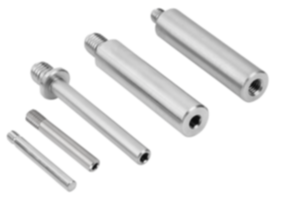
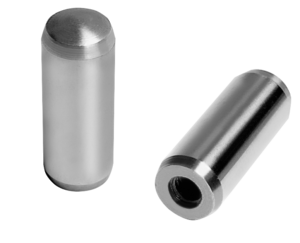
The system is complemented by guide shafts, bearing housings and structural elements such as guide columns and guide pins which together form a modular guidance system.
Carriage guides
Carriage guides enable precise linear adjustments in both the horizontal and vertical directions. They are used primarily in metrology equipment construction, precision engineering and in optical applications where the highest degree of accuracy is required.
The systems can be flexibly configured and, depending on the model, are fitted with micrometre spindles or end stops. Grey cast iron and aluminium are the materials used for carriage guides, with the aluminium versions representing an excellent compromise between weight, load capacity and precision.
Positioning systems
Building on this, positioning systems and motorised positioning systems enable high-precision movements in industrial settings. They are used for the precise alignment of components, sensors or cameras to within a hundredth of a millimetre and are employed wherever reproducible accuracy is required.
The electrically driven systems operate quietly and require little maintenance; they are used, amongst other things, in machine tools, machining centres, handling systems, and in fixture and metrology equipment construction.
A virtually play-free guide ensures high repeat accuracy. The backlash-free spindle enables precise adjustment without the need for additional clamps, whilst the self-locking design ensures secure position when stationary.
Other linear systems in machine construction
In addition to classic guide types, the range includes further components for linear guidance in machine construction.
Telescopic slides enable extendable constructions with defined travel distances and high stability. Twin-tube linear actuators offer robust solutions for standard motion tasks.
In addition, slide and shaft clamps ensure secure fixation and precise positioning of mechanical components within machines and systems.
Measuring and display elements for guide systems
A range of measuring and display elements is available for the precise control and alignment of linear motion. These include linear scales, position indicators, position sensors and level vials.
These components enable reliable position determination and facilitate the precise alignment of complex machine and equipment structures.
Guides in machine construction from norelem
With its wide product range, norelem offers a comprehensive system of solutions for linear motion in machine construction. The combination of slide guides, roller guides, round guides and positioning and measurement systems enables flexible and precise solutions for almost all industrial applications.
All systems are designed for durability, accuracy and industrial resilience, and can be efficiently integrated into modern machine and equipment concepts.
Guide elements enable the precise movement and positioning of components along defined paths in mechanical engineering.
What types of guides are there in machine construction?
In machine construction, a distinction is made between slide guides, roller guides, round guides and profile rail and roller guide systems.
How does a linear guide work?
A linear guide enables components to move in a straight line along a guide rail or guide shaft with as little friction as possible.
What is the load-bearing capacity of linear guides?
The load-bearing capacity of linear guides depends on their size, type and design, and ranges from light positioning tasks to heavy industrial loads.
What are the advantages of slide guides on machinery?
Slide guides are particularly robust, low-maintenance and resistant to dirt, moisture and environmental factors.