Locking rings, shaft collars


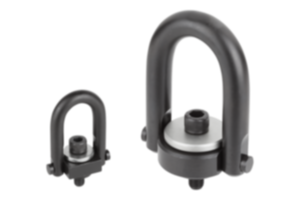


Shaft collars – for every application in machine construction
Applications and types of shaft collars
Shaft collars – easy positioning and fixating
Shaft collars – an overview of the differences
Shaft collars from°norelem
FAQ
Shaft collars – precise fixation for shafts and axles
Secure fixation is essential to ensure that components remain securely in their intended position. Even the slightest axial displacements can impair the functionality of mechanical systems. In addition to high retaining force, factors such as ease of installation, ease of maintenance and reusability also play an important role.
This is where shaft collars come into play. These clamping elements contribute to operational reliability, process stability and the longevity of the machines. Shaft collars are used to secure shafts and axles, such as by gear wheels, pulleys, bearings or couplings.
Shaft collars from°norelem
enable a positive or frictional attachment to shafts and axles.
can be fitted quickly.
provide reliable restraint even under dynamic loads.
Shaft collars – for every application in machine construction
A shaft collar is a widely used fastener element for securely fixating and positioning components on shafts or axles. They are therefore classified as fastener elements and are designed to create a frictional connection by locking.
Using shaft collars offers a number of benefits:
High retaining force°
Even distribution of clamping forces
Easy installation°
Applications and types of shaft collars
Shaft collars can be used in many different applications to secure components precisely and securely. In machine construction they are often used as stops, spacers or to axially secure bearings, gears and guide elements. Furthermore, these positioning elements are also used in automotive engineering, medical technology, process engineering and measurement technology.
The°norelem°range includes shaft collars made from the following materials
Aluminium
Stainless steel
A4 stainless steel
Plastic
Steel
The shaft collar range includes, amongst others, the following types:
One-piece shaft collars (slitted inside or outside)
Wide, slitted one-piece shaft collars
Two-piece/wide two-piece shaft collars
Shaft collars with support face
Shaft collars with clamping levers
Shaft collars with thread
Shaft collars for flat-milled shafts
One-piece shaft collars
One-piece shaft collars are positioning elements that are slitted one side internally or externally. The slit enables the shaft collar to provide a reliable grip on shafts and tubes. The slit permits the shaft collar to adapt elastically as it is tightened, thereby generating a uniform clamping force. This prevents damage to the shafts and, simultaneously stops components from slipping. The secure positioning therefore makes one-piece shaft collars particularly practical positioning elements in machine construction.
One-piece shaft collars slitted inside
One-piece haft collars slitted inside reliably prevent components from slipping. The slit in the shaft collar enables the collar to contract as the screw is tightened, thereby generating a uniform clamping force. The norelem range includes the following shaft collars with inside slits:
Shaft collars slitted outside
Shaft collars slitted outside are also used to securely position components. However, unlike the shaft collars with the slit inside, the bore on outside slitted shaft collars remains cylindrical, thus precisely enclosing the shaft. Outside slitted shaft collars can achieve up to 15% more clamping force than those with inside slits. The following models are available in the°norelem°range:
Two-piece shaft collars
Two-piece shaft collars consist of two parts. There are two half rings which are placed around the shaft or tube and then screwed together. The advantage of this type of shaft collar is that it can be fitted even when other components have already been installed. This means collar does not need to slide it over the end of the shaft or tube. In addition to offering flexibility, a two-piece shaft collar also provides a consistent clamping force. At°norelem°the following two-piece shaft collars are available:
All these models are available in both steel and 1.2305 stainless steel. Two-piece shaft collars are also available in 1.4404 stainless steel or aluminium.
Shaft collars with a clamping lever
Another type from the°norelem°range is the°shaft collar with clamping lever. This type of quick-clamp one-piece shaft collar has an adjustable clamping lever and a slit inside. The integrated clamping lever enables rapid, tool-free tightening and loosening. This flexible and quick method of fitting permits the shaft collar to be easily adjusted even whilst a machine is in operation.
This quick-clamp shaft collar is available in both steel and 1.4305 stainless steel.
Shaft collars – easy positioning and fixating
A shaft collar is a positioning and retaining element for axles and shafts. Shaft collars can secure components to prevent them from slipping. Shaft collars are used in machine construction, automotive engineering and machine tools. They are useful wherever precise positioning and easy installation are required.
A shaft collar is used as follows: The shaft collar is slid over the end of the shaft or axle and positioned at the desired point. The collar is then secured by tightened a grub screw. With°shaft collars with a wing grip°this procedure is carried out using the integrated wing grip, i.e. tool-free installation and°adjustment. This causes a clamping force applied to the shaft, preventing components from slipping.
DIN 705 shaft collars
All shaft collars in the°norelem°range in this category are manufactured as per DIN 705°or° similar to DIN 705 and can therefore be seamlessly integrated into your machinery or process. This ensures that the shaft collars are made with the dimensions and forms specified by the DIN standard. The following DIN 705 or similar to DIN 705 shaft collars are available from°norelem:°
Download the°CAD data°for the shaft collars for easy°integration of your new collars from°norelem.
Shaft collars – an overview of the differences
In the trade, all shaft collars are often considered to have the same uses.
The difference lies in how they work and how they are fastened. Shaft collars with grub screws secure components axially to act as a stop. Other shaft collars secure or position components both axially and radially via a frictional clamping force.
From a technical viewpoint, friction clamping shaft collars represents a more precise design.
It follows then, that every shaft collar is similar, but the clamping method is different.
The differences between a friction clamping shaft collar and a conventional shaft collar with a grub screw are:
higher retaining forces°
more even force distribution
better concentric accuracy°
no localised damage to the shaft
Discover the outstanding quality and reliability of our shaft collars today, and boost the efficiency and performance of your processes.
Our products are usually available immediately and are manufactured to industrial standards. They are designed for a long service life and offer you a precise and reliable solution for your applications.
FAQ
How do I tighten a conventional shaft collar?
These shaft collars are tightened using a grub screw or wing grip once it has been positioned in the desired location.
How does a conventional shaft collar work?
These shaft collars work by being positioned axially at the desired point on the axle or shaft and retained using a screw or grub screw. This ensures components are securely fixated and positioned.
What are friction clamping shaft collars and what are they used for?
These shaft collars are components that are clamped onto shafts or axles by through a frictional force. They are used to prevent components from slipping and to ensure they are positioned securely.
In which sectors are these shaft collars used?
Shaft collars can be used in a variety of sectors. Examples include machine construction, automotive engineering, process technology and laboratory technology.